Let’s start with a statement, and it is very important to have that cleared before we proceed, I am not against the use of assistive gear for joints, as long as such gear is needed. Now that we have established that crucial statement, we are free to proceed a bit further into the rabbit’s hole and look at some research and my experience on the subject.
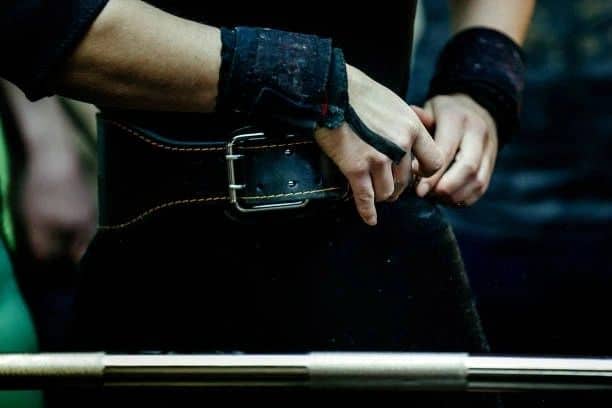
I’ve had clients coming to me, with Knee support, Elbow support, Wrist support, Belts and so on. My first question to my client, coming with any type of external joint support, is why? Usually, the answer would be that they were recommended to use it by a GP, in order to help them reduce pain they experience in the joint.
Other times it is because they believe it is better for them, and they saw so many people using it. Needless to say, the later is not a good reason, and I would kindly ask them not to use it. However, in the first scenario, my follow-up question will be what was the exact recommendation? While some are advised to use the gear all day long, since the moment they wake up to the moment they go to sleep, others are advised to use it only when practicing certain movements that cause them pain and put them in a risk of injury. Both are good answers, but I would still try to reduce the need to use any kind of equipment for both.
When using external joint support, we are taking away the work from our muscles and joints, as a post injury for acute pain, it might be the perfect solution. However, when the use of that support is becoming a habit, and is not longer required for the acute pain, that’s where I would mostly intervene. When people come to train, and they use those external support mechanisms,
they are becoming dependent on them, their muscles and joints are getting used to having that support along, and they do not get the required stimulation for them to become stronger and more stable, in which case we might see muscle hypotrophy (note, not hypertrophy). Should a client be using a single side support for a prolonged period, chances of noticing differences between left and right are increasing.
When checking the literature, a research published in 2011 found a correlation between use of external support and reoccurring injury of Powerlifters. The study consisted of 245 professional powerlifters, and checked the effects of different criteria on their injury rate. Among the parameters looked at, we can find use of supporting devices. The study reported that athletes using supportive devices reported significantly more injuries when looking at the Lower Back, Elbow and Wrist. (Siewe et al., 2011).
So back to the question of WHY? If the ultimate goal is to reduce or remove pain, the correct approach would be to teach the body how to control and use the injured joint. In order to do so we must stimulate the joint and surrounding muscles to take charge instead of letting them rely external support. Yes, it’s a process, and yes, it might take time, but that is the best way to deal with chronic pain and gain joint independent that could last long. .
If you are experiencing pain while working or engaging in daily activities, that’s alright, you can use the support for those tasks, but when you engage in training with the intention of strengthening the area and resolving the pain, do not use support as it would slow your progress. Work within your limits. Again, because I do not think it is being said enough, use external support when needed! Do not make it a habit
While I am not a fan of the use of any external help, as I am a firm believer the body is a magnificent machine that could do wonders, if you wish to use a bit of help for your extreme sets, be my guest. As long as there is no dependency created, and you are able to train and perform tasks without external assistance, it’s alright with me. However, once you become dependent, that is an indication you have used it too much, and it is time to lower the load and build your body back to being non-dependent on any form of external support.
To sum it up, using External Joint Support isn’t all bad, if used wisely and when needed. Pain is a great indication for our limits, and we should learn to work within our limits. If you feel like something is not right for you, consult a professional, but don’t do anything that might be causing you damage in the future. Hope I got you thinking. Feel free to contact me if you have any question. Stay Safe!
References:
Siewe, J., Rudat, J., Röllinghoff, M., Schlegel, U., Eysel, P. and Michael, J. (2011). Injuries and Overuse Syndromes in Powerlifting. International Journal of Sports Medicine